
Best Family Estate Cars for UK Families in 2026
Curated By
Vizion Team
Release Date
9 September 2026
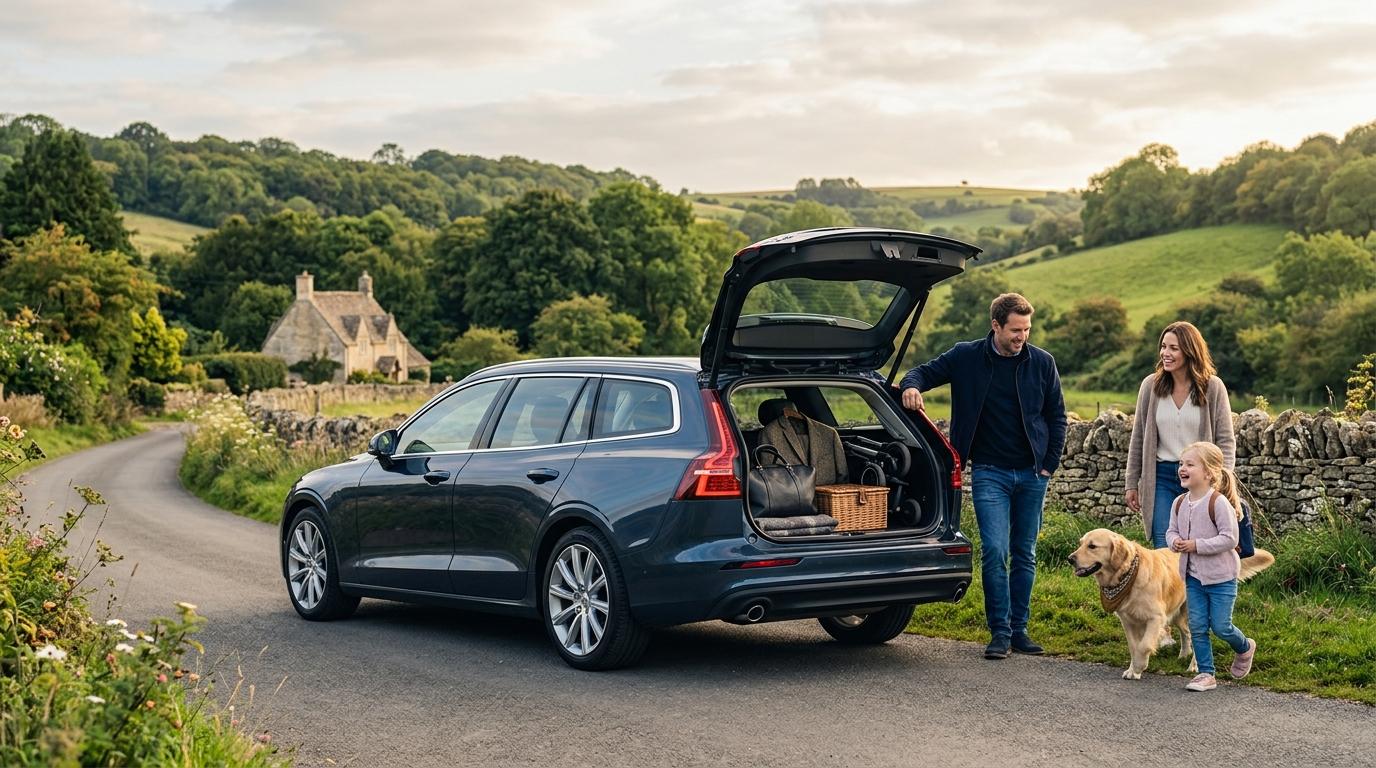
There's a moment every parent knows well. You're stood in a car park, boot open, holding a folded pushchair in one hand and a week's worth of shopping in the other, wondering how on earth it's all going to fit. That's usually the moment the estate car starts to look very appealing.
SUVs may get all the attention these days, but the best family estate cars quietly do the same job for less money, with better fuel economy and often more usable space. They're easier to load, cheaper to run, and they still drive like a normal car rather than something built for a mountain pass you'll never visit.
In this guide we'll walk through the best estate cars UK buyers should have on their shortlist, what to look for before you commit, and how you could spread the cost. And when you're ready, you can check your car finance eligibility without affecting your credit score.
Why a family estate car still makes sense
Estates have never really gone out of fashion in the UK they've just been overshadowed. Here's why plenty of families still choose one.
Estate vs SUV which is better for a family?
An SUV gives you a higher driving position and a sense of space. An estate usually gives you more actual space where it matters behind the rear seats.
Because an estate sits lower, the roofline runs further back before it drops, so you get a longer, flatter load area. You'll also typically see better fuel economy from an estate than an equivalent SUV, because there's less weight and less air being pushed around. Insurance groups are often lower too.
If you're still weighing up shapes and sizes, our guide to car body types explained breaks down the differences in plain English.
Estate vs hatchback is the extra length worth it?
A hatchback is easier to park and slightly cheaper to buy. But family estate cars typically offer between 150 and 300 extra litres of boot space over the hatchback version of the same car and that's before you fold anything down.
If you're regularly carrying a pram, a dog crate, sports kit or camping gear, that difference stops being a nice-to-have and starts being the reason you bought the car.
What to look for in the best family estate cars
Before you fall in love with a set of alloy wheels, it's worth being a bit boring for five minutes. These are the things that actually matter day to day.
Boot space and load lip height
Headline boot figures are useful, but they don't tell the whole story. Look for:
- Seats-up capacity this is what you live with most of the time
- Seats-down capacity how flat does the floor actually go?
- Load lip height a low lip means less lifting, which your back will thank you for
- Boot width between the arches the difference between a buggy fitting and not fitting
Some estate cars with biggest boot figures also come with useful extras like underfloor storage, boot dividers and 12v sockets.
ISOFIX points and rear seat space
If you're fitting more than one child seat, check how many ISOFIX points the car has and where they sit. A few of the best family estate cars offer three across the rear bench, which is genuinely rare and very handy.
Also check rear legroom with the front seats set for tall adults, and whether the middle seat has a raised hump it makes a real difference on long journeys.
Running costs, MPG and insurance
The purchase price is only part of the picture. Look at MPG, road tax band, insurance group and service intervals together. A most economical family estate car on paper can still cost more overall if it's in a high insurance group.
Our guide to the most fuel-efficient cars is a useful companion read here.
Reliability and service history
For used buyers, a full service history matters more than mileage alone. The most reliable estate cars tend to be the ones that were bought as sensible family transport and looked after properly which, happily, is most of them.
The best family estate cars to consider
Here's our pick of the best estate cars for families UK drivers can realistically buy, whether new or used.
Skoda Octavia Estate
The default answer, and for good reason. The Octavia Estate offers a huge 640-litre boot in a car that costs roughly the same as a mid-size hatchback. It's comfortable, efficient, well built and easy to live with.
Diesel versions make excellent motorway cars, while the petrol models suit shorter, mixed journeys.
Best for: all-round value
Skoda Superb Estate
If the Octavia isn't quite big enough, the Superb Estate is close to unbeatable. Rear legroom is limousine-like, the boot swallows 660 litres seats-up, and it's supremely relaxing on long trips.
It's one of the best estate cars for long motorway journeys you can buy at any price.
Best for: space and comfort
Ford Focus Estate
Sharper to drive than most rivals, with a well-judged ride and a practical 575-litre boot. Cheap to run, cheap to service, and there are plenty on the used market.
If you're weighing up a Focus, our used Ford Focus buying guide covers the trim levels and common faults worth knowing about.
Best for: driving enjoyment
Toyota Corolla Touring Sports
A strong shout for the best hybrid estate cars UK buyers can choose. Self-charging hybrid power means excellent town economy without needing to plug anything in, and Toyota's reliability record speaks for itself.
Best for: low running costs
Vauxhall Astra Sports Tourer
Underrated, well equipped and often very good value used. A sensible choice if you want a cheap family estate car without dropping to the very bottom of the market.
There's more detail in our used Vauxhall Astra buying guide.
Best for: value for money
Kia Ceed Sportswagon
Kia's seven-year warranty is a genuine reason to buy. Even a three or four-year-old example may still have cover remaining, which takes a lot of the worry out of used buying.
Best for: peace of mind
Peugeot 308 SW
Stylish, comfortable and one of the better-looking best small estate cars around. The interior feels a step above the price point, though the low-set steering wheel divides opinion worth a test drive.
Best for: style
Volvo V60 and V90
Volvo built its reputation on estates and it shows. Both are exceptionally comfortable, safe and beautifully finished. The V90 in particular is a superb long-distance family car.
Watch running costs on higher-spec models, but as premium best used family estate cars go, these are hard to fault.
Best for: safety and comfort
BMW 3 Series Touring and Audi A4 Avant
If you want your practicality with a bit of driving polish, these two deliver. The 3 Series Touring is the more engaging drive; the A4 Avant has the classier cabin.
Both are strong best automatic estate cars options, and both hold their value reasonably well.
Best for: premium feel
Dacia Jogger
Not a traditional estate, but it deserves a mention. Seven seats, enormous flexibility, and a price that undercuts almost everything else on this list. If budget is the deciding factor, it's very hard to ignore.
Best for: budget families
Best family estate cars on a budget
You don't need a big budget to get into a good estate.
Best family estate cars under £10,000
At this level you're looking at Octavia Estates, Focus Estates, Astra Sports Tourers and Ceed Sportswagons that are around five to eight years old. Prioritise service history over mileage a well-maintained 90,000-mile car is usually a safer bet than a neglected 50,000-mile one.
Best used estate cars under £5,000 UK
Below £5,000 you're into older, higher-mileage territory, but there are still good cars out there. Budget for an independent inspection and set aside a contingency for tyres, brakes and a service.
Our guide to the best used cars under £1,000 shows what's realistic at the very bottom of the market.
Watch out for outstanding finance
Always run a history check before buying privately. If the car still has money owed on it, you could lose both the car and your cash. We explain the process in buying a car with outstanding finance.
Estate cars for towing and dog owners
Estates make excellent tow cars because the weight sits low and the wheelbase is long, which helps stability. If you're caravanning or trailering, look for a strong diesel or a higher-torque petrol and check the car's braked towing capacity against your load.
For dog owners, the best estate cars for dog owners UK tend to be the ones with a low load lip, a flat floor and a squared-off tailgate opening the Octavia, Superb and V60 all score well here.
How to finance a family estate car
Once you've found the right car, the next question is how to pay for it. Estate car finance works exactly the same way as finance on any other body style.
Hire Purchase (HP)
You pay a deposit, then fixed monthly payments over an agreed term. At the end, the car is yours. It's straightforward and popular with families who keep cars for a long time. Learn more on our hire purchase page.
Personal Contract Purchase (PCP)
Lower monthly payments, with a larger optional final payment if you want to keep the car. Good if you like changing cars every few years. See our PCP car finance page for the details.
No deposit options
If you'd rather keep your savings intact, no deposit car finance may be available depending on your circumstances.
If your credit isn't perfect
A less-than-ideal credit history doesn't automatically rule you out. Lenders look at affordability as well as credit score. It's worth reading about what credit score you need for car finance, and you can explore bad credit car finance if that applies to you.
Want to see what the numbers might look like? Try our car finance calculator for an indicative monthly figure.
Find your next family estate car with Vizion Finance
The best family estate cars prove you don't need a large SUV to move a family, a dog and a boot full of gear. You just need the right shape of car and a finance plan that fits your budget rather than stretching it.
At Vizion Finance we search a panel of trusted UK lenders to find a deal that suits your circumstances, and checking your eligibility won't affect your credit score.
Check your eligibility today and see what you could drive.
Side-By-Side Comparison
Answers to Everything
Yes. Estate cars combine car-like driving manners with a large, easily accessible boot, making them well suited to prams, child seats, sports kit and holiday luggage.
It depends on what you value. Estates generally offer more usable boot space, better fuel economy and lower running costs. SUVs offer a higher driving position and, in some cases, four-wheel drive.
An estate is essentially a hatchback with the roofline extended over a longer boot. This usually adds between 150 and 300 litres of luggage space with the seats up.
Popular models such as the Skoda Octavia Estate, Volvo V60 and BMW 3 Series Touring tend to hold value well thanks to steady demand from families and business drivers.
The Toyota Corolla Touring Sports and Skoda Octavia Estate consistently perform well in reliability surveys, and the Kia Ceed Sportswagon benefits from a seven-year manufacturer warranty.
Often, yes. Estates typically sit in lower insurance groups than equivalent SUVs because of lower repair costs and lower performance, though this varies by model and engine.
It may be possible. Lenders assess affordability alongside credit history, so it's worth checking your options even if your credit file isn't perfect.
Most family estate cars offer between 500 and 660 litres with the rear seats up, rising to as much as 1,950 litres with the seats folded.
Fuel Your Ambition with better financing.
Join 10,000+ drivers who found their dream deal with Vizion Finance. No jargon, just clear paths to ownership.