
Car Depreciation Explained | A UK Driver's Guide
Curated By
Vizion Team
Release Date
2 October 2026
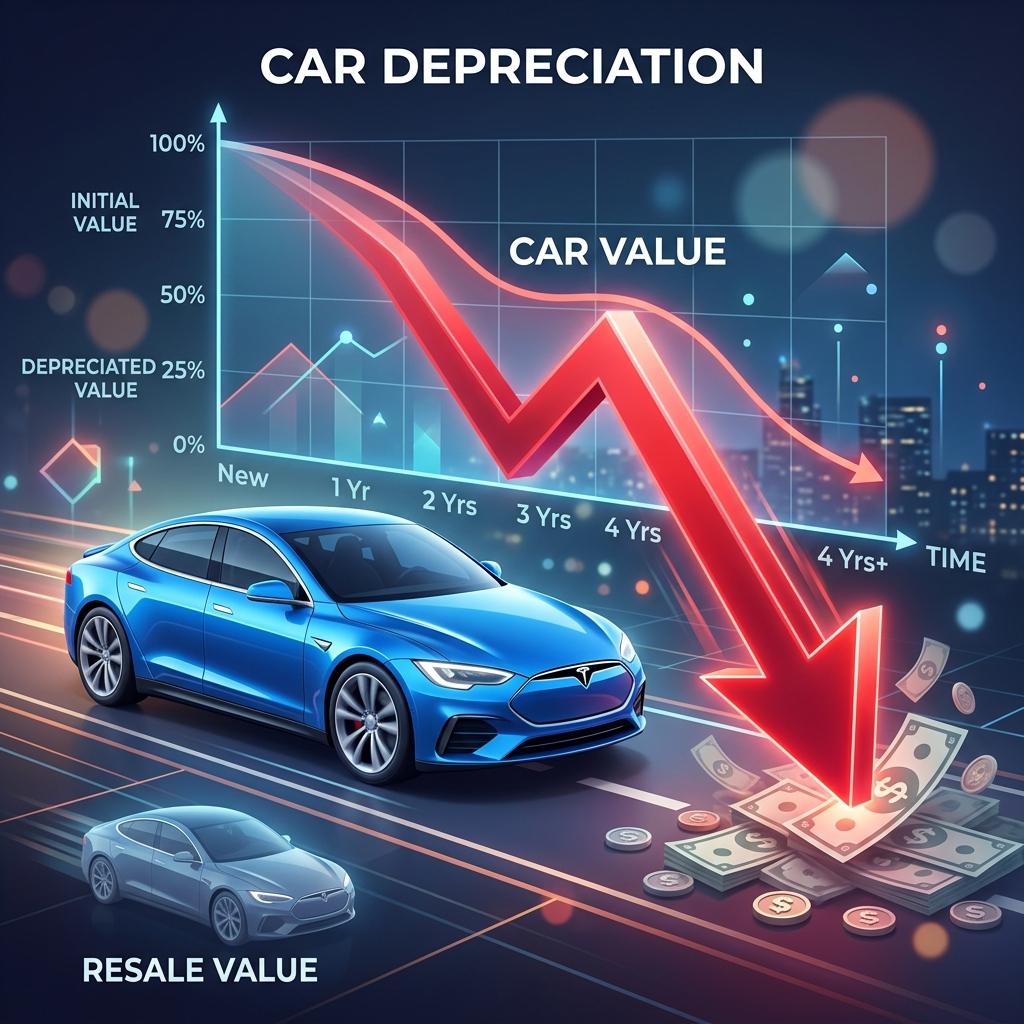
The moment you drive a new car off the forecourt, it starts to lose value. It's one of those facts every driver has heard but few really understand and it can quietly cost you thousands over the years you own a vehicle.
At Vizion Finance, we think it's worth getting to grips with. Knowing how car depreciation works helps you buy smarter, protect your money, and choose a finance deal that actually suits how you use your car. This guide breaks it all down in plain English.
What Is Car Depreciation?
Car depreciation is simply the difference between what you pay for a car and what it's worth when you come to sell it. Every car loses value over time, and depreciation is the single biggest cost of owning one often more than fuel, insurance, and servicing put together.
Put another way, if you buy a car for £20,000 and sell it three years later for £10,000, that £10,000 gap is depreciation. It's money you'll never see again, which is why it pays to understand it before you buy.
How Does Car Depreciation Work?
Car depreciation doesn't happen at a steady pace. A car loses the most value in its earliest years and then the decline slows down.
Most new cars lose between 15% and 35% of their value in the first year alone. After three years and around 36,000 miles, a typical car will have lost roughly 50% to 60% of its original price. This is why the phrase "driving it off the forecourt" carries a real cost the biggest drop happens fastest.
The upside is that once a car is a few years old, depreciation slows considerably. A five-year-old car will lose value far more gently than a brand-new one, which is a key reason many buyers look at nearly-new and used models.
How Much Do Cars Depreciate Each Year in the UK?
There's no single figure, but as a rough guide for the UK market:
- Year 1: 15%–35% loss
- Years 2–3: a further 10%–20% each year
- After year 3: the rate flattens, often 5%–10% a year
So a £25,000 car could realistically be worth around £10,000–£12,000 after three years. The exact car depreciation rate depends heavily on the make, model, mileage, and condition which brings us to the factors that speed it up or slow it down.
What Affects How Fast a Car Loses Value?
Several things influence how quickly your car depreciates:
Mileage
High mileage is one of the biggest value-killers. The more miles on the clock, the less a buyer will pay. Keeping your annual mileage sensible helps protect resale value.
Age
Time alone drags a car's value down, even if it barely leaves the driveway. That said, age matters less once a car is past its steep early-years drop.
Make and Model
Some brands and models are simply more desirable second-hand. Reliability, running costs, and reputation all feed into how well a car holds its value.
Condition and Service History
A tidy car with a full service history and no warning lights will always fetch more than a scruffy one. A documented history reassures buyers and slows depreciation.
Fuel Type
Fuel type increasingly affects resale value. Demand for petrol, diesel, hybrid, and electric models shifts over time, and that feeds straight into depreciation.
Number of Owners
Fewer previous owners generally means a higher resale price. A car with one careful owner looks more appealing than one that's been passed around.
Which Cars Hold Their Value Best?
If you want to limit car depreciation, choosing a model that holds its value is one of the smartest moves you can make. Cars that hold their value best in the UK tend to be:
- Popular, well-reviewed models with strong reliability records
- In-demand SUVs and premium models with waiting lists
- Cars with low running costs and good fuel economy
- Sought-after used automatics in family-friendly sizes
Desirability is everything here if lots of buyers want a car second-hand, its value stays higher.
Which Cars Depreciate the Fastest?
At the other end, some cars lose value alarmingly quickly. Fastest depreciating cars often share a few traits: high original price tags, expensive running costs, luxury models that flood the used market, and cars with poor reliability reputations.
Larger, thirstier vehicles and niche models with a small pool of buyers also tend to depreciate faster, simply because fewer people want them second-hand.
How to Reduce Car Depreciation
You can't stop a car losing value, but you can slow it down. Here's how to reduce car depreciation:
- Buy nearly-new or used let someone else absorb the steepest first-year drop
- Keep the mileage sensible avoid racking up unnecessary miles
- Maintain a full service history every stamp adds resale confidence
- Keep it clean and cared for inside and out, condition sells
- Choose a popular colour and spec neutral, in-demand options resell faster
- Pick a model known to hold its value do your homework before buying
How Depreciation Affects Your Car Finance
This is where depreciation matters most if you're financing a car and it's often overlooked.
When you take out car finance, you're borrowing against a car whose value is falling. If the car depreciates faster than you pay down the balance, you can end up owing more than the car is worth. This is known as negative equity, and it's worth understanding before you sign anything.
Different finance products handle depreciation differently:
PCP and Depreciation
With Personal Contract Purchase (PCP), your monthly payments are largely based on predicted depreciation. The lender estimates the car's value at the end of the agreement (the Guaranteed Future Value) and you pay the difference, plus interest. Because the depreciation risk sits with the lender, PCP can offer lower monthly payments.
HP and Depreciation
With Hire Purchase (HP), you're paying off the full value of the car over the term, so by the end you own it outright. Depreciation doesn't affect your monthly payments the same way, but it does affect what the car is worth once it's yours.
Understanding depreciation helps you choose the finance route that fits your budget and how long you plan to keep the car.
Should You Buy New or Used to Avoid Depreciation?
There's no wrong answer it depends on what you value.
Buying new gives you the latest model, full warranty, and that new-car feeling, but you take the full hit of first-year depreciation. Buying used or nearly-new means someone else has already absorbed the steepest drop, so your money stretches further and depreciation is gentler from day one.
For many buyers, a nearly-new car offers the best balance modern features and warranty cover, without the eye-watering first-year loss.
Finance Your Next Car with Vizion Finance
Understanding car depreciation puts you in a stronger position whether you're choosing a model, planning your budget, or picking a finance deal.
At Vizion Finance, we work with a panel of lenders to help UK drivers find car finance that suits their circumstances. Whatever you drive off in, we'll help you do it with a clear picture of the costs involved.
Answers to Everything
Most new cars lose between 15% and 35% of their value in the first year. Premium and higher-priced models often sit at the top of that range, while popular, in-demand cars hold their value a little better.
Cars that hold their value best are typically popular, reliable models with strong second-hand demand including sought-after SUVs, premium models with waiting lists, and economical everyday cars.
Yes. Higher mileage lowers a car's resale value, as buyers factor in the extra wear. Keeping your annual mileage reasonable helps protect your car's worth.
It varies. Depreciation on electric cars depends on battery health, model demand, and how quickly technology moves on. Some hold their value well, while others depreciate faster as newer models arrive.
Depreciation affects how much your car is worth compared to what you owe. If a car loses value faster than you pay off the balance, you could face negative equity owing more than the car is worth.
Fuel Your Ambition with better financing.
Join 10,000+ drivers who found their dream deal with Vizion Finance. No jargon, just clear paths to ownership.